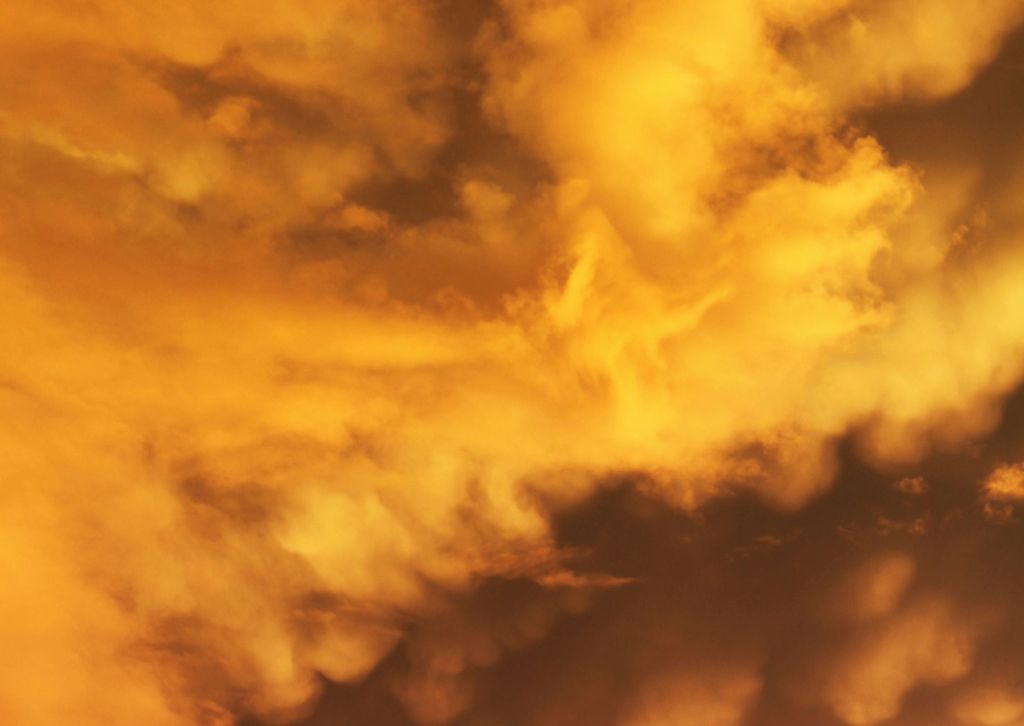
I’ve just been rereading this paper by Haley Perkins entitled “Teaching under an orange sky: Toward reimagining educational purpose on a damaged planet“. It seems apposite just now, although maybe it would also work with the title “Teaching under an orange president” 🙂
The paper begins with Haley teaching on Zoom during the pandemic under a sky turned an ominous orange by wildfires. She offered her students the opportunity to talk more deeply about the fires but they opted for their usual lesson, not wanting to get behind in their studies. This led her to ask the question:
“In a world saturated by events resulting from ecological change, mass extinction, digitized integration, and sociocultural upheaval, what then is (or should be) the purpose of education?” p. 509
Strangely enough, that question is still on my mind several years later …
Hayley draws on Biesta’s (2022) work to suggest that education should be seen as enabling new ways of relating to the world, rather than as a means to some specific end. She emphasises the value of ecocentric relational pedagogies. These pedagogies would disrupt the assumed separation of nature and culture, which is so common across priviledged Anglophone education. She also suggests a move away from the ways in which we tend to centre the needs of (particular groups of privileged) humans and their perspectives in so much of what we do.
This led her to suggest the following moves:
- away from learning about the environment (as something external to us) to learning in or for the environment;
- welcome ways of knowing that include the mysterious, formless, and wonderful;
- honouring ways of knowing beyond our usual epistemologies;
- resocialise learners with their bodies, senses and felt experiences of being part of naturecultures;
- create a culture of care between human and other-than-human nature;
- growing up by facing uncomfortable truths about the ways we are complicit in, or benefit from, harm in the world;
- making space to hold grief, fear and anger in our learning spaces.
What sorts of things could this mean for higher education? Maybe we have more pass/fail courses that give learners space to risk engagement with new ways of knowing? Maybe storytelling that makes kin with non-human others displaces some of our project reports about shaping natural spaces in ways that prioritise (certain priviledged) human needs? Maybe some of our experiential learning in the world involves making reparations? Maybe we care less about whether our students are satisfied and more about whether they feel their relationships with naturecultures matter? What else …?
Photo by Jack Hamilton on Unsplash edited by Vel McCune
 wickededucation.blog
Leave a comment